Click on the slide!

Now Accepting Nominations for 2013 Gleitsman International Activist Award

The 2013 International Activist Award honors those who have struggled to correct social injustice around the world. Nominations are due by June 28th and $125,000 will be awarded to the winner(s) on November 5, 2013.

MORE
Click on the slide!

Max Bazerman Named CPL Codirector

Max Bazerman, the Jesse Isidor Straus Professor of Business Administration at Harvard Business School (HBS), has been appointed co-director of the Center for Public Leadership. He will join David Gergen in co-leading the Center, shaping its intellectual agenda and its…

MORE
Click on the slide!

American's Confidence in Their Leaders Rises, Remains Low

Results now available for the 2012 National Leadership Index, our eighth annual measurement of public attitudes toward the leadership of 13 different sectors in America, ranging from business and nonprofits to politics and religion.

MORE
Click on the slide!

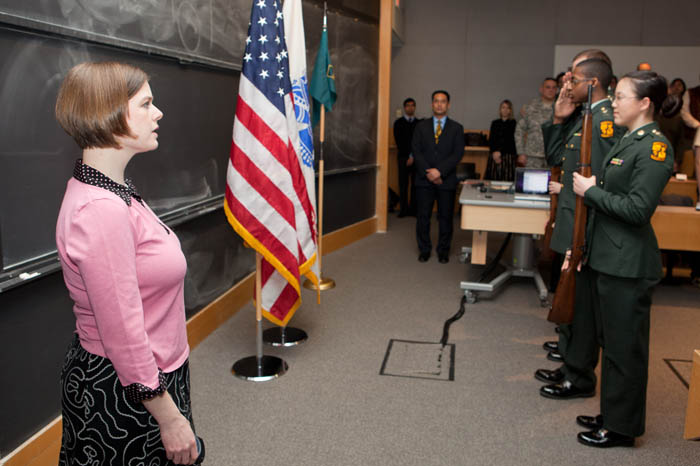
Research Finds Leaders Less Stressed Than Followers

Prof. Jennifer Lerner and researchers at the Harvard Decision Science Lab published their latest study on leadership decision-making.

MORE
Frontpage Slideshow (version 2.0.0) - Copyright © 2006-2008 by JoomlaWorks
20 May 2013

Broad diversity continues to characterize the Latino Leadership Initiative (LLI) sponsored by the Center for Public Leadership (CPL) at Harvard Kennedy School. CPL announced today that 71% of the participants in the fourth installment of LLI are the first in their families to attend college.

Launched in 2010, LLI is a weeklong program that prepares rising college seniors for the opportunities and challenges they will face in the coming decades. On June 9, Harvard will welcome to campus 42 students who were chosen from a highly selective application process. The eight participating schools are Loyola Marymount University (Los Angeles); University of California, Merced; Texas A&M International University; the University of Houston; the University of Massachusetts–Boston; the University of Texas–Pan American; Miami Dade College; and the City University of New York’s Macaulay Honors College.

The LLI curriculum includes classes on public narrative, community organizing, negotiation, moral leadership, emotional intelligence and critical thinking, networking, and public speaking. LLI participants will also have opportunities to build relationships with respected Latino mentors from the government, nonprofit, and business sectors.

This year’s faculty includes Andy Zelleke of Harvard Business School; Marshall Ganz of Harvard Kennedy School; Harvard Divinity School professor Davíd Carrasco; and Georgetown University professor Robert Bies. Among the guest speakers will be Dr. Robert Sackstein, a Harvard Medical School professor who specializes in bone marrow transplants and stem cell research; Dr. Efrain Garza Fuentes, director of multicultural programs at the Walt Disney Company; and Johnny Marines, manager of the Romeo Santos/Aventura music group. Award-winning journalist and NPR host Maria Hinojosa will be the mistress of ceremonies at the concluding dinner.

After their week in Cambridge, students will work in teams with faculty and administration from their home university to design and implement a community service project. This past year, for example, University of California, Merced’s Project 10% has sought to increase high school graduation rates in the San Joaquin Valley. After receiving $10K from the university, local government, and nonprofit supporters, the LLI graduates who designed the project recruited and trained 45 mentors from UC, Merced student body. These mentors have given presentations to more 3,600 eighth graders.

Quarterly teleconferences hosted by CPL will promote cross-pollination among the projects while helping students integrate into the projects the personal development goals they identified during LLI.

“We are enormously proud of our students, and of all that LLI has been able to accomplish in the four years since Entravision cofounder and chairman Walter Ulloa’s commitment sparked this initiative,” said Andy Zelleke, LLI faculty director and senior lecturer at Harvard Business School. “Including this year’s cohort, there will be 150 talented LLI alumni having impact in their communities and, soon enough, in a range of professions. And we’re thrilled that, this September, three of them will begin their graduate studies at Harvard.”

Coca-Cola will be the lead sponsor of this year’s initiative. Other supporters include seed donor Entravision Communications; four-year sponsors Texas A&M International University, Univision, Southwest Airlines, and the Walt Disney Company; as well as Time Warner.

14 May 2013

In the aftermath of 9/11, billions of dollars in grant funding were devoted to integrating crime data across jurisdictional boundaries based on the belief that the attacks could have been prevented if only the disparate clues that had been detected could have been stitched together and shared in a timely manner.

“There was more selling of hardware than solutions, because procurement cycles favor large capital outlays instead of enduring solutions to a problem,” says former Zuckerman Fellow Brad Davis, vice president of business development for Forensic Logic, a San Francisco-based startup that has created an inexpensive way for law enforcement to participate in the sharing of information. “Now more than a dozen years later, there’s still no effective way to share information throughout the local, state, and federal law enforcement and intelligence communities. The grant funding is going away, so with no money to maintain the programs, you’ve got a lot of white elephants that didn’t work in the first place draining budgets even more.”

As the citizens of Boston learned last month, when a high-profile violent act happens, the law enforcement and intelligence community can be very good at mobilizing massive numbers of law enforcement personnel to collect evidence and go through records in a short period of time to create a profile of the suspects. But most of the more than 1.1 million violent crimes that occur annually in the U.S. don’t get that kind of attention.

“People think law enforcement is like CSI, with in-depth information immediately available to any cop at a computer,” says Davis. “In reality, it’s much closer to Andy Griffith, with phone calls and paper records ruling the day. There are 19,000 law enforcement agencies in the U.S., and precious few have the ability to understand what’s happening in the city or county next to them. About 4,000 have no digital records management at all—it’s still pen and paper.”

That’s where Forensic Logic comes in. “Our mentality,” Davis explains, “is that by more effectively creating a repository of relevant crime data and a platform for sharing that information, we can bring that same ability to rapidly create a profile of those other 1.1 million violent crimes that occur every year—nearly half of which go unsolved.”

Launched six years ago with like-minded angel investors, Forensic Logic is a public-private partnership that administers a government-run program known as the Law Enforcement Analysis Portal. Capitalizing on the advent of cloud computing and robust encryption technology, the company has become the largest platform for the sharing of local crime data in the country. “We can quickly integrate with about 80% of all records systems in the U.S., and get very rich, robust data from these systems that otherwise are locked away and underutilized,” says Davis.

Taking a ground-up approach, Forensic Logic goes from agency to agency, pooling crime data and integrating it into a secure repository. The process of integration involves a library of custom data connectors that can extract information from the array of records systems used throughout U.S. law enforcement and intelligence agencies. The industry standard for this work of data collection and integration can be 90–120 days, says Davis. Forensic Logic does it in four.

The result is that law enforcement information systems that couldn’t communicate with each other can now collaborate across jurisdictional boundaries. As a result, clues from an open case in Salinas, California can help a law enforcement agency in Midland, Texas, bust a drug-running operation. “And our analytics are usually better than what the agencies’ own systems allow,” Davis adds. “In most situations, we can instantly create meaningful analyses around actors and a crime. Our system can determine in seconds what used to take months working the old, paper-based way.” Going forward, he hopes this ability to collate and analyze information at lightning speed will mean that fewer crimes will go unsolved, and also that crimes will be more difficult to commit.

Davis is no stranger to the way government agencies operate, having served as a naval intelligence officer for five years after college. After graduating from HKS and Dartmouth’s Tuck School of Business, he spent a year and a half at a spinoff of Kissinger Associates in New York City. He later worked for Monitor 360, a consulting firm to the intelligence industry that not only brought him back to his hometown of San Francisco, but also had him applying data to homeland security issues. “It was a revelation seeing how poorly the government handled information,” says Davis. When he came across the team at Forensic Logic just over a year ago, he knew he’d hit on something unique. “It was clear that this group was doing something very different in the government space—instead of padding costs and selling a product, they were slashing costs to build a platform.” He joined the firm a few months later to lead its business development efforts.

Most of Forensic Logic’s clients are local law enforcement agencies. Whereas many of its competitors charge up to $60K for data integration, says Davis, Forensic Logic does this work for free to encourage participation. Law enforcement agencies pay $25 per user per month for access to the company’s data and also its analytics suite; insurance companies, retail firms, and other commercial clients pay more for analytical services and anonymized data. “We provide our services below cost to local law enforcement agencies,” Davis explains, “because we think every officer in America should have access to the information needed to stay safe and solve crimes. However,” he adds with a smile, “we do ask our federal customers to pay a little bit more.”

An example of how the company puts its data to work is a pilot project to reduce the trafficking of underaged girls in Oakland, California. “We were asked by the California Department of Justice to find ways to utilize our data to reduce human trafficking in the state, which has become an enormous problem,” says Davis. “We’ve added a facial recognition component to our data to allow officers in the field the ability to immediately identify those who are trafficking these girls and bring them to justice.”  By working with organizations such as HKS professor Swanee Hunt’s Hunt Alternatives Fund and the National Center for Missing and Exploited Children, Forensic Logic also brings a new capability to identify children who have gone missing from one jurisdiction and surface in another. “Our intention,” Davis states, “is to make the trafficking of children a very, very difficult crime to commit.”

Of all the things that make Davis excited about his job, one in particular is a policy he was adamant about putting in place: nonprofits and academic organizations working to reduce crime will receive Forensic Logic’s resources for free. “We’ve put together a dataset that’s never existed before, and the truth is we don’t know yet what can be done with it. We are a mission-driven organization, so what excites us is as many sharp, committed minds as possible finding ways to combat crime in ways we’ve not even thought of yet.”

13 May 2013

“Regulatory Moneyball is a good ideal,” said Cass Sunstein, Harvard Law School professor and author of, most recently, Simpler: The Future of Government, at a presentation to a packed Darman Room audience at CPL last Thursday. He was referring to his three-year tenure, from 2009 to 2012, as head of the White House Office of Information and Regulatory Affairs (OIRA). His work there, he said, involved determining whether a proposed rule was “consistent with best principles and best practices.” And the reference to Michael Lewis’s book (and subsequent film starring Brad Pitt based on it) about the rigorous statistical analysis Oakland Athletics general manager Billy Beane used to assemble a competitive baseball team, succinctly captured Sunstein’s own goal, which was to rely on careful consideration of the likely effects of regulations, including both lives and dollars saved.

In the book Nudge, Sunstein and coauthor Richard Thaler elaborate on their theory of libertarian paternalism, which applies principles of behavioral economics to the law. As OIRA’s choice-architect-in-chief, Sunstein was “hardly a free agent,” he wryly observed. Even so, the Administration’s efforts yielded impressive results. The net benefits of major rules enacted during the initial three fiscal years of George W. Bush’s first Administration amounted to $3.4 billion, Sunstein reported; during the equivalent time frame for the first Obama Administration, the total was $91.3 billion. These benefits included not only billions in economic savings for businesses but also greater energy efficiency, thousands of lives saved, and tens of thousands of illnesses and accidents that were prevented. For example, thanks in part to smarter rules, the highway death total in 2011 was the lowest in recorded history.

“All our choices,” Sunstein explained, “have architecture behind them,” whether the subject is rental car options, cell phone plans, home mortgage forms, or healthcare coverage. Government and businesses are becoming increasingly sophisticated in how such options are presented. Sunstein noted that in New York City, changes to the way information is presented on the touch screens used to pay for a cab ride have led to a 10% increase in tips.

Paying attention to choice architecture and using the nudge approach embedded in libertarian paternalism can help offset certain common decision-making errors, Sunstein argued. Among them: the tendency to calculate probabilities inaccurately, the propensity toward unrealistic optimism (“the brain has more trouble processing negative information,” Sunstein explained), difficulty imagining long-term consequences (people who are better connected to their future selves—more able to recognize themselves in their images of their future selves—“are more likely to delay gratification,” said Sunstein), and inattentional blindness, the way that focusing on one thing can prevent us from seeing other things. (In a famous experiment, students were asked to watch a ninety-second video and to count how many times people passed a basketball to each other. Halfway into the video, a student dressed in gorilla suit walks into the middle of the circle of teams passing basketballs, stares into the camera, beats her chest, and then walks off.

Incredibly, half the observers watching the video completely missed the gorilla’s seven-second appearance on camera.)

As Sunstein points out in his latest book, a core concept involved in writing rules and regulations that help to save lives and money is simplicity itself—literally. “Complexity can have serious adverse effects,” he told the CPL audience. Citing research showing that the difficulty involved in understanding and filling out the Free Application for Federal Student Aid (FAFSA) “creates more of a deterrent effect on college attendance” than the benefit provided by “the extra scholarship dollars,” he added: “Simplification is a nudge.”

The two separate systems that make up the human mind help explain the common decision-making errors and the need for nudges. System 1 is automatic, effortless, and fast; System 2 is deliberative, calculative, and slow. Choice architecture seeks to avoid putting a strain on System 2—it tries, in other words, to make things “automatic, simple, intuitive, and meaningful,” Sunstein said. It seeks to avoid “comparison friction” and to help decision makers identify a clear path. Information may not be helpful in the abstract, so the more you can help people make comparisons among the various options the better.

Effective choice architecture also provides “smart disclosure,” said Sunstein: by making information available in machine-readable formats, it lets consumers “know about the nature and effects of their own past choices, so that they can make informed comparisons.”